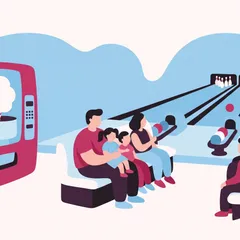
Best cotton candy vending locator in Illinois
Illinois signed the strongest bowling alley in the dataset and one of the weakest venues in it, within a fortnight. Same state, same venue type, ten times the difference.
Where cotton candy machines earn their keep.

Desk
Where cotton candy machines work and where they don’t, one venue type at a time: traffic, who signs, revenue share, the right spot inside the building.
The Venue Desk reports on the places cotton candy machines go: bowling alleys, indoor playgrounds, family entertainment centers, malls, grocery stores, zoos and aquariums, ballparks, movie theaters, hotels and water parks. Each Venue Guide covers who visits, how long they stay, who signs the deal, what share the venue expects and where in the building the machine belongs. Sources: public venue and industry data, regulations, and venue listing data, each labeled where it is used.
Every article the desk publishes follows our editorial standards: every figure sourced, every data set labeled with where it comes from and when, a review date at the end and a public corrections process.
Illinois signed the strongest bowling alley in the dataset and one of the weakest venues in it, within a fortnight. Same state, same venue type, ten times the difference.

A Lawrence play centre on below-average traffic took half of net. For an operator that is the warning, not the opportunity.
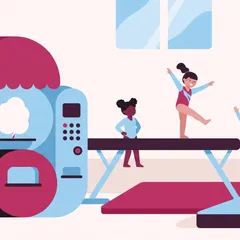
Kentucky’s rate never varies. What varies is the venue, and all four of the state’s are smaller than the type they belong to.
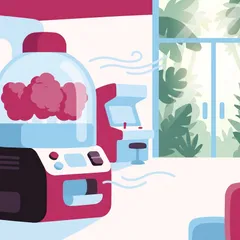
Slidell is a strong venue in a punishing climate. Louisiana asks the product to hold up in conditions no other state in this record matches.
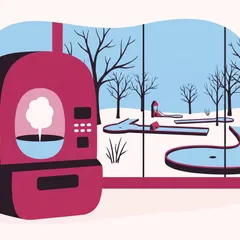
Dry winter air is the easy part of a Maine placement. The harder question is what sixteen months means at a venue that closes for five of them.
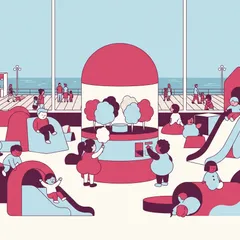
Ocean City reports 150,000 visitors a year. Planning a route around the 410-a-day average that implies is how a specialty machine runs empty in July.
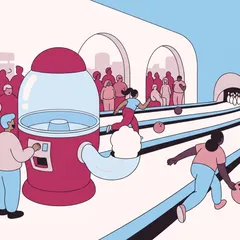
Tyngsborough offers more captive time than any placement in the dataset and pays its venue less than any other. For an operator that is the best pairing available.
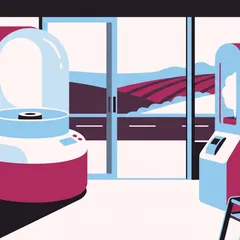
Two small towns and one university city, inside three weeks. Michigan’s listings are this record’s clearest picture of a rural specialty route.

Spun sugar fails in humidity. Minnesota spends five months at the opposite extreme — and still has an empty row in this dataset.
Six Mississippi placements, three different percentages, and not one below the national median. This is the most expensive state in the record to place a machine in.

No state licence, no machine registration, and a metro made of separate municipalities. Missouri is the state where a route is priced per city hall.

The best unit economics in this series and the worst logistics. Montana is a state where the spreadsheet and the odometer disagree.

Most states let an operator pay the whole enrolment fee up front. Nebraska limits the advance to a fifth of it, which changes the cash flow of a first machine.
Nevada’s climate is the easiest a floss machine will meet and its licence is a flat annual charge. Both facts point the same way: go wide, not small.

A $350 licence is three and a half months of a standard placement fee. In New Hampshire the first machine has to clear that before it clears anything else.

Flanders agreed a better share than Burlington and reports 1,000 visitors a year against 120,000. On an operator’s spreadsheet only one of those numbers matters.
High dry air is ideal for spun sugar. The complication is that New Mexico licenses the seller rather than exempting the machine, and taxes the receipts.

Two New York venues took 30% of net, including the only indoor playground in the country below the median. For an operator that is 62 cents a serving.
On paper the cheapest state in this series to run a machine in: no licence, no decal, the best share available. Its one venue sees twenty-seven people a day.

North Dakota is the only state in this series where each machine is licensed separately and running one unlicensed is unlawful. Plan the route around that.

The licence question in Oklahoma is worth $425 and turns on one fact about the machine. Settle it before anything else in the quote.
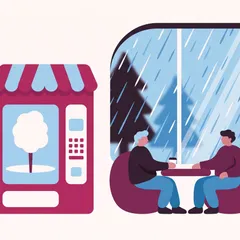
Every other state in this series is humid in summer or dry all year. Oregon is wet and cool on one side of the Cascades and arid on the other.
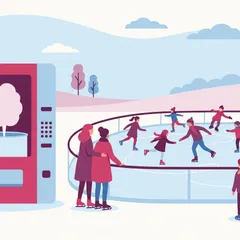
An ice rink is the one venue type where the climate and the traffic both run in a floss sugar machine’s favour. Pennsylvania has the biggest one here.

Every other state in this series trades cheap licensing against long distances. Rhode Island has the lowest entry cost and the shortest drive.
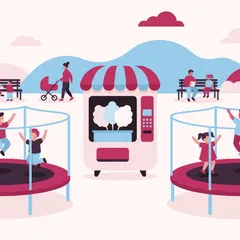
Anderson and Laurens are the same venue type, the same size and the same terms, half an hour apart. For a route that is the ideal starting pair.

South Dakota charges by location rather than by machine, and halves the food licence after midsummer. Both quirks reward planning the route before filing.
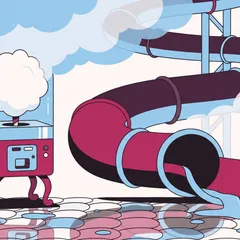
The best traffic in the state sits in the wettest building in the dataset. Hermitage is the clearest case of a placement where the air fights the numbers.
Texas is the only state in this record whose median share is 50%. Its busiest venue accepted the worst terms and is still the best placement in the state.
Every other state in this series prices a vending permit per machine, per company or per fleet. Utah prices it per county, by risk.
The cheapest state in this series to try a machine in is also the one with the least to go on. Vermont’s nearest comparison is 70 miles away and unrankable.

Virginia’s busiest venue is also its hardest: an oceanfront amusement park whose peak season and peak humidity are the same months.

Washington’s statute protects the operator’s cash better than any state here, and its single listing sits 200 miles from Seattle in the arid half.
West Virginia has no placement of its own and seventeen within a short drive. The in-state cost is a qualified person rather than a licence fee.
Seven Wisconsin venues across six categories, and the one with the most visitors is the one engineered to hold moisture in the air all year.
Every other state in this cluster fights humidity. Wyoming hands that back and charges for it in driving distance instead.
Trade winds, year-round humidity and a locator that names Hawaii in its exclusions. Spun sugar’s hardest market is also the one nobody is working.
Boise’s air is dry enough to be an asset and its growth has built the venues. What Idaho has not got is anyone placing machines into them.
Four neighbouring states hold twenty-six signed placements between them. Indiana holds none, and nothing about the state explains why.
Most states license after the fact or not at all. Iowa asks a month ahead, which makes the licence a scheduling problem rather than a cost one.
Five cotton candy placements, from a Miami deli taking 770 people a day to a Cape Canaveral rage room taking 23 — the record’s full share span in one state.
Alabama’s health permit follows temperature control. Spun sugar needs none, which may put a cotton candy machine outside the permit entirely — ask the county rather than assume.
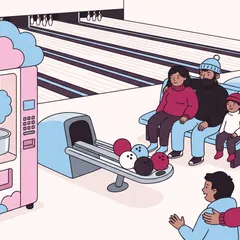
Arkansas charges up to $93 a year for the decal on a machine like this, and the air works against the product for half the year. Both belong in the arithmetic.

California’s six specialty placements all agreed the same share. The variation is in the counties, where 58 different health departments permit the same machine.
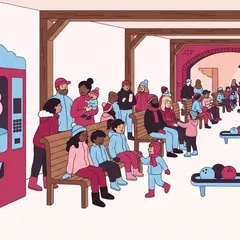
A Winsted bowling alley reporting 210 visitors a day signed at 40% of net — the same rate a venue half its size would get. Traffic did not buy a better deal.
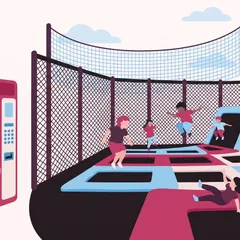
Georgia is the only state whose entire record is specialty machines. Four venues, four cotton candy placements, and a trampoline park seeing 410 people a day.

Ohio is a bowling-alley market for floss sugar. Four of its six cotton candy placements sit behind a shoe counter, and all of them pay the venue 40% of net.
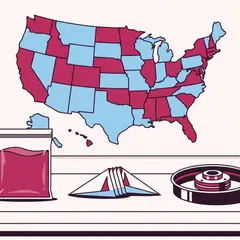
Twenty-nine states have a signed cotton candy placement. Twenty-one have none at all, and two are outside the specialty locator’s coverage entirely.
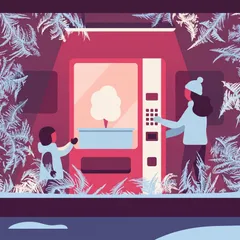
Alaska is outside the specialty locator’s stated coverage, so placing a cotton candy machine here means doing it yourself. The dry interior air is the one thing working in your favour.

Floss sugar’s enemy is moisture, and Phoenix averages under nine inches of rain a year. Arizona may be the easiest climate in the country for a cotton candy machine.
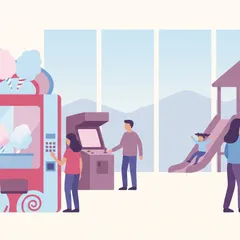
Semi-arid air is an asset for floss sugar, and Colorado has plenty of it. What it also has is a decal on every machine and two different licensing offices.

Three counties, a whole-state route inside a two-hour drive, and a coastal season that swings harder than anything in the national data.
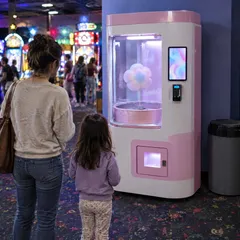
These centers draw more visitors than the typical bowling alley and book parties that buy in rounds, as long as the machine stays clear of the café.
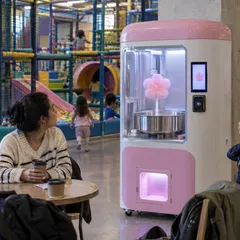
At an indoor playground every family brings a buyer, so the work is in placement, party scheduling and keeping spun sugar off the slides.
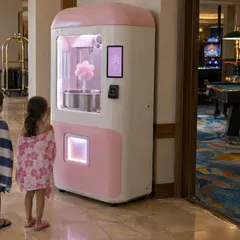
A hotel lobby sells cotton candy only when children walk through it. Here is how to tell a family resort from a business hotel before you sign.
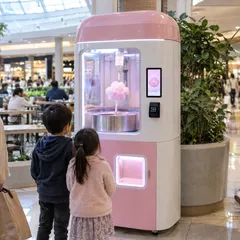
Malls rent floor for a living, so expect the top share. The real choice is whether a percentage or a flat monthly license costs you less.
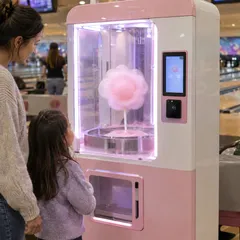
Bowling alleys are the most common venue among signed cotton candy listings; the catch is that league nights fill the lanes with adults, not the children who buy.
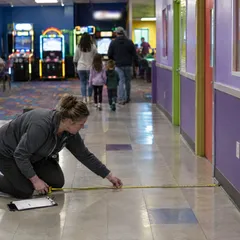
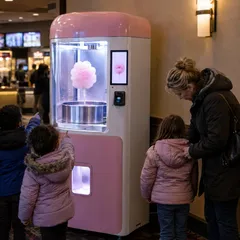
A cotton candy robot asks more of a building than a snack machine does, so measure the floor, the circuit, the air and the crowd before you sign.
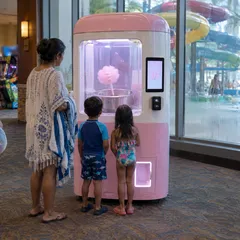
Spun sugar collapses within hours in humid air, and the pool deck is the most humid spot in the park. Here is where a machine can still work.
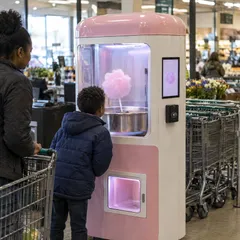
The store manager smiles, then sends you to corporate. Grocery entrances are sold chain by chain, and the realistic yes comes from an independent grocer.
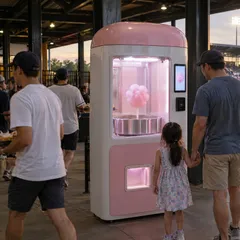
At a big-league stadium you negotiate with the food contractor, not the team. At a minor-league park, the tighter limit is 70 seconds a serving.
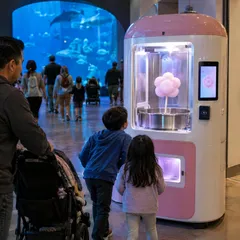
The zoo director rarely signs. In the public contracts, food rights sit with a concessionaire or a nonprofit society, so that is where the pitch belongs.
Theaters keep about 80 cents of each concession dollar after supplies, so a machine earns a yes only by selling to kids the stand never reaches.